
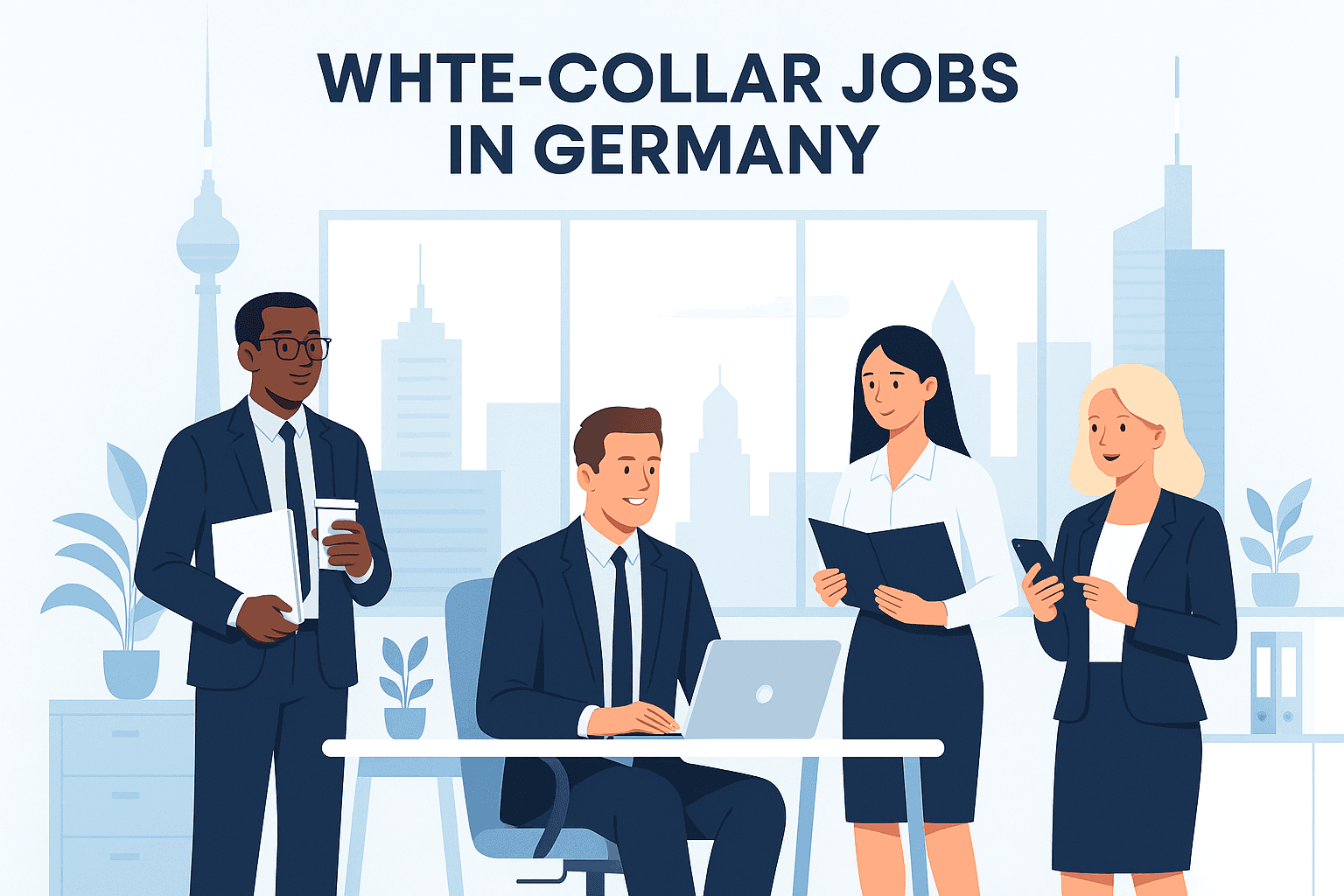
How to Get a High-Paying White-Collar Job in Germany in 2025: The Complete Guide for International Professionals
Germany is one of the strongest economies in Europe, home to global corporations, powerful Mittelstand companies, cutting-edge tech hubs, and high-paying white-collar careers.
But for foreigners, breaking into Germany’s corporate job market can feel challenging — not because of skills, but because of culture, expectations, presentation, and strategy.
If your goal is to land a high-paying white-collar position in Germany in 2025 (€60,000–€120,000+), this guide gives you a practical roadmap based on:
- Real hiring trends
- HR expectations
- Mistakes foreigners make
- Visa & Blue Card pathways
- German CV & interview culture
- LinkedIn presence
- Professional photo (Bewerbungsfoto) standards
- The competitive reality of the German market
Let’s start.
🇩🇪 Why Germany Needs International White-Collar Talent in 2025
Despite economic slowdowns in some sectors, Germany still faces a massive skilled labor shortage (Fachkräftemangel) in white-collar roles.
Germany needs:
- Engineers
- Software developers
- Data analysts
- Finance & banking professionals
- Consultants
- Sales & marketing talent
- Product managers
- Project managers
- HR specialists
- Medical & healthcare administrators
Key reasons:
- Aging population
- Digital transformation
- Expansion of multinational companies
- Remote-friendly international hiring
- New Skilled Worker Act (2024)
In short:
Germany actively wants qualified foreign professionals — especially in high-value corporate roles.
💼 What Counts as a High-Paying White-Collar Job in Germany?
Here are typical salary ranges (gross per year):
| Position | Typical Salary |
|---|---|
| Software Engineer | €60,000–€90,000 |
| Senior Developer | €75,000–€110,000 |
| Data Scientist | €70,000–€115,000 |
| Management Consultant | €65,000–€120,000 |
| Finance/Controlling | €60,000–€90,000 |
| Product Manager | €65,000–€105,000 |
| Sales Manager (Tech) | €80,000–€140,000 |
| Project Manager | €55,000–€90,000 |
| HR Business Partner | €55,000–€85,000 |
If your goal is to break into these roles, your “presentation quality” matters almost as much as your skills.
🧭 Step 1 — Build a German-Ready CV (Lebenslauf)
White-collar hiring in Germany prioritizes:
✔ clarity
✔ structure
✔ professionalism
✔ relevance
Germany dislikes:
❌ fancy templates
❌ colorful layouts
❌ long storytelling
❌ American-style resumes
Your CV must:
- Be 1–2 pages
- Include a professional photo (still common in Germany)
- Show roles, dates, responsibilities, and results
- Include technologies, tools, and industry skills
- Use a simple corporate layout
- Include language skills (A1–C2)
- Mention visa status if relevant
A German CV should look calm, clean, and professional.
📸 Step 2 — Use a Professional Bewerbungsfoto (white-collar standard)
Germany remains one of the few countries where a professional application photo still influences hiring outcomes — especially for corporate roles.
German hiring managers expect:
- bright lighting
- clean background
- business or business casual clothing
- friendly but professional expression
- HD quality
- no filters
- “trustworthy corporate look”
Most foreigners struggle with this due to:
- weather (dark rooms → bad lighting)
- lack of access to German-style studios
- high photo studio costs (€120–€250)
- cultural differences
AI tools like JobFotos.ai make this simple:
- upload one normal photo
- get a German-style corporate portrait in 60 seconds
- 2400px HD
- 15 professional business styles
- identity-preserving (InstantID + CodeFormer)
- perfect for CV + LinkedIn + visa applications
For foreigners competing in a European white-collar market, this is a major advantage.
🔍 Step 3 — Choose the Right Job Platforms
Best platforms for high-paying jobs:
- StepStone
- Indeed
- Xing (still used in corporate Germany)
- Honeypot (for developers)
- BerlinStartupJobs
- Wellfound
- Company portals (Siemens, BMW, SAP, Allianz etc.)
For international applicants:
- Arbeitnow
- EnglishJobs.de
- EU Blue Card Portal
- Make it in Germany
💬 Step 4 — Learn Essential Corporate German
You do not need perfect German for many white-collar roles, especially in:
- IT
- SaaS
- Consulting
- Startups
- Global companies
BUT you do need:
✔ Business etiquette German
(even A2–B1 can dramatically improve trust)
Learn phrases for:
- introductions
- meetings
- emails
- negotiations
- “Projekt”, “Aufgabe”, “Verantwortung”, “Deadlines”, “Teamwork”
It shows respect and integration — both crucial in German corporate culture.
👥 Step 5 — Optimize Your LinkedIn (and in Germany: Xing)
German recruiters check:
- LinkedIn photo
- headline
- About section
- experience
- skills
- recommendations
- activity
To impress German HR:
✔ Use a corporate-style professional photo
✔ Write a clear headline (“Software Engineer | Python | Cloud”)
✔ Add a German mini-summary (optional)
✔ Show measurable results
✔ Build a few German connections
✔ Keep the tone professional and humble
🧪 Step 6 — Understand German Interview Culture
Germany prefers:
✔ structure
✔ honesty
✔ clear logic
✔ reliability
✔ humility + confidence (balanced)
Avoid:
❌ overselling
❌ vague answers
❌ American-style hype
❌ talking too fast
❌ being indirect
Good structure example:
Situation → Task → Action → Result (STAR)
- add Tools used
- add Teamwork component
🧲 Step 7 — Stand Out As an International Candidate
Highlight:
- your international perspective
- global experience
- languages
- remote collaboration skills
- cross-cultural communication
- technical expertise
- adaptability
German companies value stability and long-term fit.
🎯 Step 8 — Aim for the Blue Card or Skilled Worker Track
A Blue Card makes you far more attractive as a candidate.
Minimum salary thresholds in 2025:
- ~€45,000 for shortage occupations
- ~€40,000–€44,000 in tech
- ~€43,800 general
- lower for graduates in Germany
Blue Card benefits:
- job mobility
- faster permanent residency
- easier family reunion
- higher trust from employers
🏁 Conclusion: Getting a High-Paying Job in Germany Is Achievable
Germany needs international professionals — especially in white-collar sectors.
But to succeed, you must:
- adapt your CV to German standards
- present yourself professionally
- understand cultural expectations
- build a strong LinkedIn presence
- prepare a high-quality Bewerbungsfoto
- communicate clearly and confidently
A professional-looking profile can make the difference between:
❌ being ignored
and
✔ being shortlisted for high-paying positions
🚀 Create a German Corporate-Standard Photo in 60 Seconds
All you need is one normal selfie.
→ Get a clean, bright, professional German-style Bewerbungsfoto
→ Perfect for CV, LinkedIn, Blue Card, and corporate applications
Trusted by 200,000+ professionals worldwide.
Related Articles
Ready to Create Your Professional Headshot?
Transform your photo into a professional headshot in 60 seconds with AI
Subscribe to Our Newsletter
Get the latest AI headshot tips, guides, and exclusive offers delivered to your inbox.
We respect your privacy. Unsubscribe at any time.